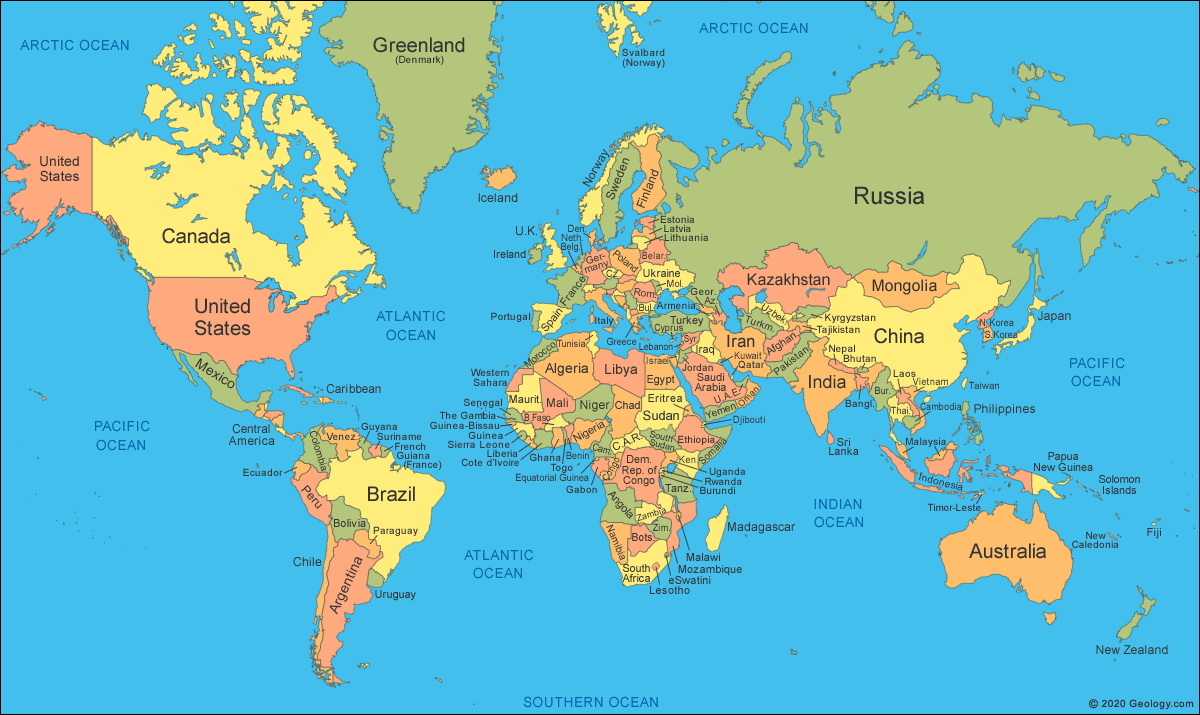
1. Species extinction. This is a huge problem because not only is it terrible that beautiful animals are being erased from the face of the earth, but extinction also effects entire ecosystems. This means that there may be unseen consequences to extinctions. Two of the biggest causes of extinction are poaching and destruction of habitat.
I believe that society can help stop the rapid decline some animal populations in two steps. First, in order to stop poaching, anti-poaching forces need to be beefed up and supplied with better equipment. Most countries that deal with poaching aren't in great economic positions, but this idea will increase employment and government spending on equipment may boost the economy. Second, countries should establish committees designed to review projects that may lead to a high level of deforestation to discover the impact said projects will have on endangered/critical species. This committee can advise on how to complete these projects with the lowest environmental impact. Governments may want to consider providing subsidies to those who choose to follow committee recommendations.
2. Scarce water sources. Pollution and mismanagement has led to a global water crisis. Some countries are already facing problems with access to usable water and most other countries are looking at similar problems in the near future.
In order to fix this problem, some sort of global council needs to be establish. The council should consist of scientists who have knowledge on the best way to use such a scarce resource and preserve what we have left as well as political figures who should be concerned with making water more accessible to countries who are experiencing shortages.
3. Income disparity. While some dispute what is to be done about income disparity and whether it is that big of an issue at all, people around the world are being affected by income disparity and see it as a huge problem.
In an attempt to not be overly political, I will give an idea of how to equip those with low income with the skills to improve their financial standing. The most important aspect to closing the income gap is closing the educational gap. Countries should be striving to make education more affordable and accessible at all levels.
4. War/armed conflict. While some may argue that war is sometimes unavoidable, the utter devastation war brings about cannot be denied. Globally, armed conflict seems to be moving towards insurgencies and terrorism. However, there are several countries - notably Russia and North Korea - that have shown the aggressive tendencies that historically lead to large-scale conflict.
It is very tough to solve a problem that affects so much of daily life and brings about full-scale devastation like war does. However, there are several things that can be done to make war less likely and its consequences less destructive. First, the continued development of precision weapons that limit collateral damage would make the fallout of strikes much less destructive. Second, war often is not in the interest of neutral countries. These countries need to understand that it is in their best interest to get involved and negotiate peace.
5. Financial instability. Several countries have been on the verge of financial collapse in the past decade and this past year alone China and Greece were in dire straits. I am worried about the possibly fallout when a country finally goes over the brink.
The best way to reduce the chance of financial collapse is to involve more economists in politics. Politicians do not always have the strongest economic backgrounds and often don't act with a country's best economic interests in mind.
6. Climate change. While climate change is another polarizing topic, more and more scientific evidence is emerging to support climate change. This makes climate change a huge issue. The possible effects of climate change are almost unimaginable. If we truly are on a path that will render earth inhabitable, changes need to be made.
Finding and developing clean energy is very important to slowing climate change. Governments around the country should invest heavily in research and development of clean energy. Pollution given off by corporations and factories should be met with taxes to encourage environmentally friendly production. Also, public transportation should be improved to the point where it is favorable to driving a car, reducing the pollution from traffic. This would require making it faster, safer, and cleaner.
7. Terrorism. Terrorism is becoming a real fear on an international level. Despite its instant impact of death and destruction, it also is economically costly and imparts a constant fear in citizens.
The best way to combat terrorism is intelligence gathering. Most governments have superior technology compared to terrorists and should use it to gain whatever advantage possible. Prevention should be the main focus and extreme diligence is required.
8. Poverty. Studies have shown that 80% of humanity lives on less than $10 a day. This means that most people can't afford simple necessities such as food, water, shelter, and clothing.
Poverty should be attacked two ways: equipping people to emerge out of poverty and charity. Charity is required to help those currently in dire straits but should not be solely relied on. Governments should develop services to provide citizens living in poverty with access to food (possibly through agriculture), education, and low income housing. This is the only way for people to emerge from poverty.
9. Availability of medical care. While improvements are being made in regards to availability, there is still not enough access to quality medical care. This is especially true in third world countries, where it is almost impossible to find medical care.
The best way to handle this problem is to lower the cost of medical care in developed countries, possibly through increased competition. Governments of third world countries may want to consider bringing in medical professionals and supplies from advanced countries. While this is costly, it will be worth it in the long run because sick individuals place a very heavy financial burden on countries.
10. Global political instability. Political instability leads to a litany of problems that stretch past just one country. Political instability means that not much can get done in countries and globally. It affects trade, security, and order on a global level.
The first way to solve political instability is to rid countries of ruthless, irrational dictators (cough North Korea cough). Dictators like this are dangers to global security and create an incredible amount of instability. The second way to reduce political instability is putting systems that allow bloodless regime changes to occur. Nothing creates instability like parties warring for control, coups, and bloody upheaval.